
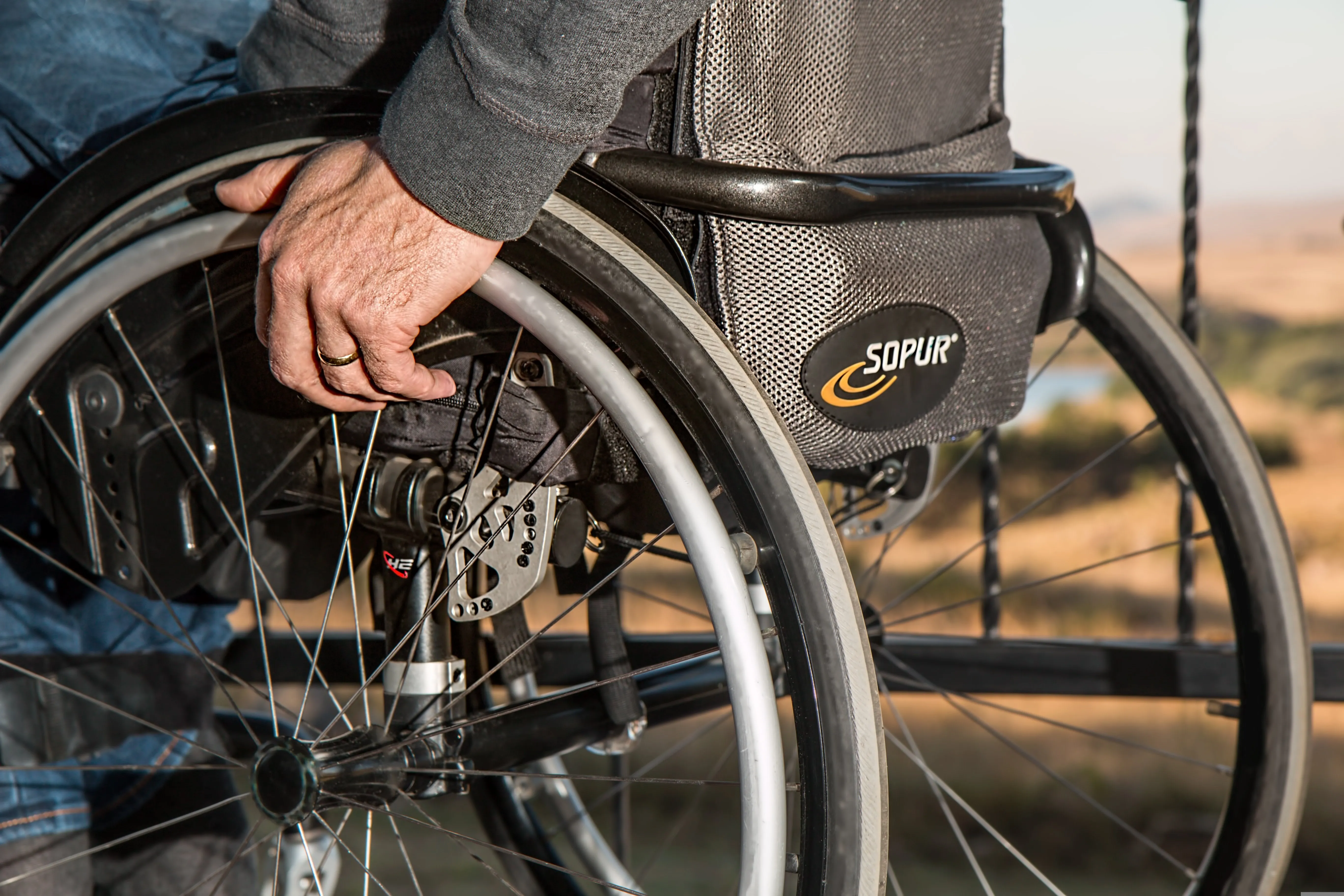
If someone in your home uses a wheelchair, walker, or any kind of mobility aid, flooring isn't just a design choice — it's a safety and functionality decision. And one of the most common mistakes we see is installing floating LVP in spaces that need true accessibility support.
Floating LVP is one of our most recommended products — for the right rooms. But "wheelchair-accessible flooring" is a different conversation, and we want to make sure you have the full picture before you install.
The Problem With Floating LVP for Wheelchair Users
Floating LVP is installed without adhesive — the planks lock together and "float" over the subfloor. That flexibility is one of the things that makes it easy to install and replace. But under repeated wheelchair use, that same flexibility becomes a liability.
Here's what happens over time: Wheelchair wheels — especially manual chairs — create concentrated, repeated pressure at the same points along the floor. Floating planks can flex slightly with each pass, and over months or years, the locking joints can loosen, edges can lift, and seams can separate.
That's not just a cosmetic problem. A raised edge or separated seam is a wheel-catch hazard — especially dangerous for self-propelled chairs or walkers.
This doesn't mean LVP is off the table. It means the installation method matters — and in wheelchair-accessible spaces, glue-down LVP is usually the right answer.
Glue-Down LVP: The Better Option for Mobility Aids
Glue-down LVP is adhered directly to the subfloor using a pressure-sensitive adhesive. There's no gap underneath, no flex, and no locking joint movement. Every plank is anchored in place.
For wheelchair users, this means:
- No plank movement or flex under repeated wheel pressure
- No joint separation over time
- A flatter, more consistent surface that rolls smoothly
- Lower trip and catch risk from lifted edges
Glue-down also tends to be thinner (no attached underlayment required), which reduces the floor height transition at doorways — an important detail for wheelchair users navigating between rooms.
When Tile Is the Right Answer
For high-traffic wheelchair paths — main hallways, bathrooms, kitchens — porcelain or ceramic tile is often the gold standard. When properly installed over a solid subfloor, tile doesn't flex, doesn't shift, and won't develop edge lift over decades of use.
What makes tile work for accessibility:
- Rigid surface: Zero flex under load — wheels roll cleanly without resistance from plank movement
- Grout joint width matters: Narrow grout joints (1/8" or less) create a smoother rolling surface than wide joints
- Larger format tiles: Fewer grout lines overall means fewer potential wheel-catch points
- Matte finish: Better traction than polished tile, especially in bathrooms where water is present
The main trade-off with tile is that it's hard and can be unforgiving during falls. Depending on your priorities and your home, the solution might be all tile throughout, all glue-down LVP throughout, or a mix of the two.
We'll Walk Through the Whole Home With You
Accessibility needs vary by room, by the type of mobility aid being used, and by the existing subfloor. We do in-home consultations because this is exactly the kind of conversation that needs to happen in person — not just online.
Book a Free In-Home VisitWhat About Transitions and Thresholds?
Transitions between rooms are easy to overlook, but they matter most where two different floors meet.
Tile and glue-down LVP rarely finish at the same height. Tile sits a little higher because of its mortar bed, so wherever the two join, you get a small step. On a path a wheelchair or walker uses, that step needs careful handling.
Our goal is simple: keep the height change small and gradual, so wheels roll right over it instead of catching. Here's how we do that:
The right reducer strip.
We use aluminum reducers — durable, with a secure screw-down fit — sized to the exact height difference so they bridge the gap with a smooth slope, not a hard lip.
Minimize the gap first.
Before the transition ever goes in, we plan the tile and LVP thicknesses together and level the subfloor, so the two surfaces finish as close to flush as possible.
The Short Version
If you're planning a flooring project with accessibility in mind, here's the quick guide:
- Avoid floating LVP in primary wheelchair paths — the planks can shift and joints can loosen over time.
- Use glue-down LVP in living areas and bedrooms where you want the warmth and look of LVP without the movement.
- Use large-format tile with narrow grout joints in bathrooms, kitchens, and high-traffic hallways for the most durable, stable surface.
- Plan your transitions — flush or minimal-height transitions between rooms are just as important as the floor itself.
Every home is different, and every accessibility need is different. We've worked with homeowners planning ahead for aging in place, families with young wheelchair users, and everything in between. What works in a hallway might not be right for a bedroom — and we're here to help you figure out the right answer for each room.
Let's talk about your specific situation.
We offer free in-home consultations throughout Polk County and the surrounding areas. If accessibility is part of your project, we want to see the space, understand the mobility aid being used, and give you a recommendation that actually works — not just a generic answer.
Want to learn more about flooring?
View More Expert Articles